Showing posts with label modern art. Show all posts

Sunday, October 25, 2020

 Pandemic and craziness in the world!

Everyone has something to say about the strange year of 2020. Like most people, it's been a crazy year for me! I've been busy in spite of the pandemic and haven't been able to paint much for a couple of months.
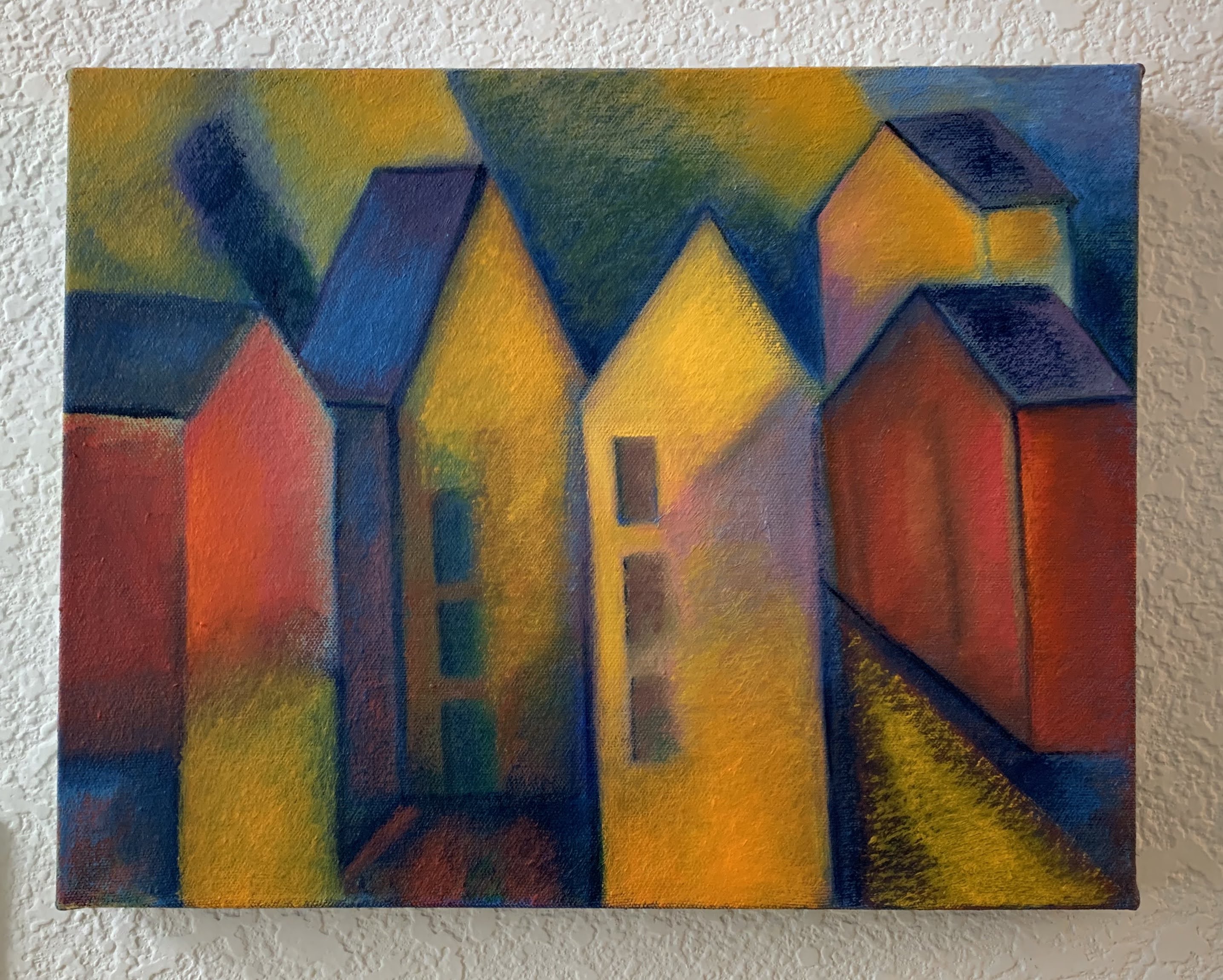
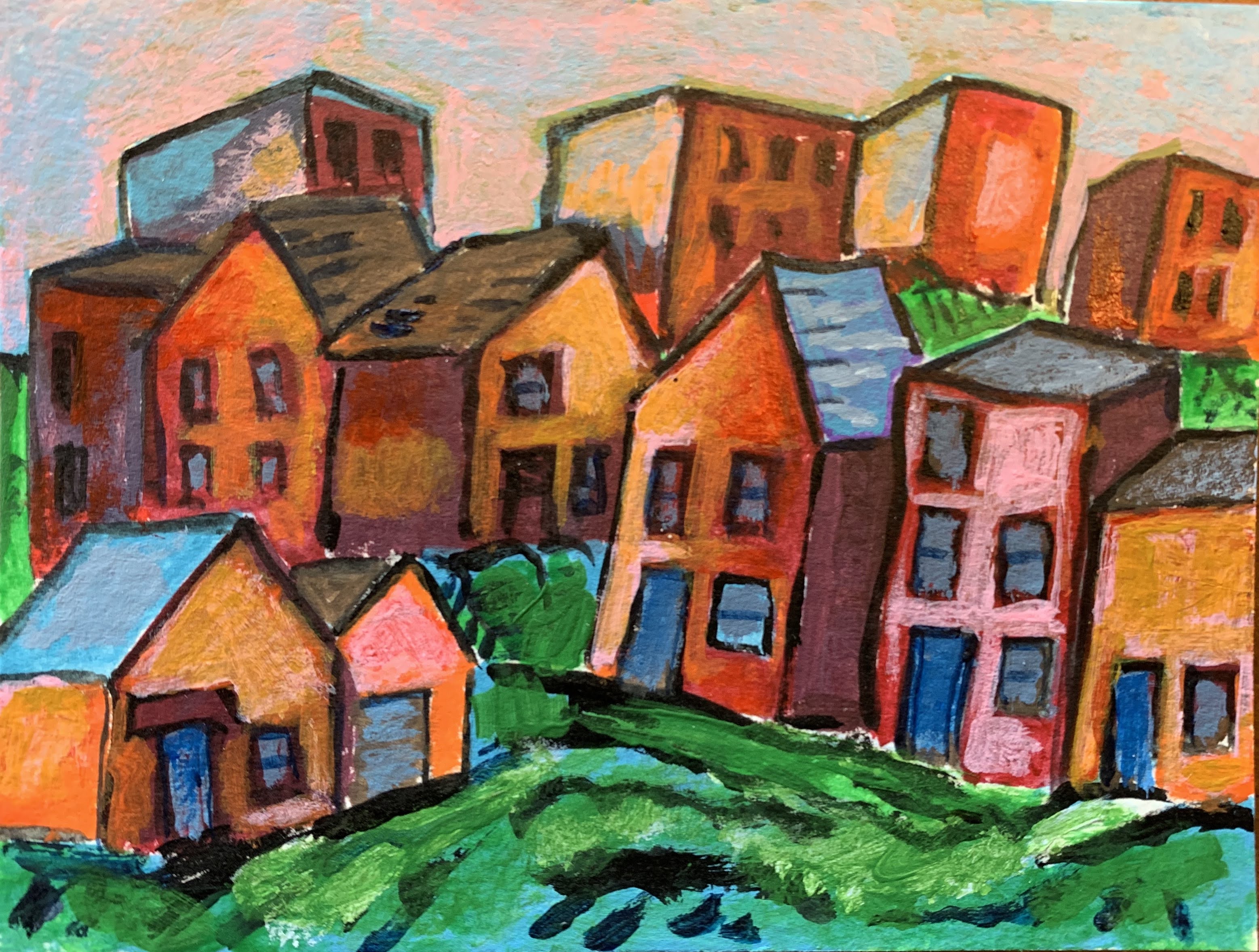
I haven't posted my recent work this year but since I'm painting again, I decided to do it today. Here are some of my new paintings completed this year before June.
Oil on canvas
Oil on canvas
Oil on canvas
Oil on canvas


Oil on canvas

Oil on canvas

Oil on canvas


Small acrylic paintings on paper


Friday, April 6, 2018

Art and Life

The Ups and Downs of life create moods and turmoil for all of us.  

Francis Bacon


Francis Bacon, Two Studies for Self-Portrait, 1977, oil on canvas  
"People have been dying around me like flies and I've had nobody else to paint but myself…  I loathe my own face. One of the nicest things that Cocteau said was ‘Each day in the mirror  I watch death at work.’ This is what one does to oneself.” - Francis Bacon, 1975  (http://keehuachee.blogspot.com)


Käthe Kollwitz

Woman with a dead child
(https://www.theguardian.com/)

This is Käthe Kollwitz’s most famous image of war. The picture’s edges press in on its subjects like the mother’s despair.  Kollwitz's work represented the horror of war and was used to illustrate WWII.  Her work was done in the early 20th century and reflected the tragedy of losing her son in WWI and the poverty and trauma that she saw as a doctor's wife in Berlin.  "In July 1936, she and her husband were visited by the Gestapo, who threatened her with arrest and deportation to a Nazi concentration camp; they resolved to commit suicide if such a prospect became inevitable.[25] However, Kollwitz was by now a figure of international note, and no further action was taken." (https://en.wikipedia.org)


Saturday, March 3, 2018

Chuck Close

The art of Chuck Close 

Here is a brief bio: "Charles Thomas "Chuck" Close (born July 5, 1940) is an American painter, artist and photographer who achieved fame as a photorealist, through his massive-scale portraits. Close often paints abstract portraits of himself and others, which hang in collections internationally. Close also creates photo portraits using a very large format camera. Although a catastrophic spinal artery collapse in 1988 left him severely paralyzed, he has continued to paint and produce work that remains sought after by museums and collectors." (https://en.wikipedia.org/wiki/Chuck_Close)


'Big Self Portrait', (1967-68)
acrylic on canvas (107.5"x83.5")

'Big Self Portrait' is fifty times life size and was done by using a half a teaspoon of black paint which was thinned to the consistency of water. Close used both brushes and airbrush.  He blended with an eraser attached to a drill.  

Chuck Close Self-Portrait, 1991For this painting Close used a Polaroid photo that he mapped into grids.


Self-Portrait, 2004-2005


This is from Chuck Close's Red, Yellow, Blue exhibit at the Pace Gallery in 2015.

Things to know about Chuck Close: 
He revived the art of portrait painting.
He was a key figure in the Photorealism movement of the 1970's.
Chuck Close struggled with dyslexia and partial paralysis.
He used the grid system in his art. This became a creative expression and an area for growth for Chuck.
He also used a variety of techniques and medias. 
His work has remained relevant long after Photorealism lost it's popularity.    


Wednesday, March 24, 2010

Matisse: Living Color in the Midst of a Black and White World

When it comes to use of Color, Henri Matisse is your man.
Born in 1869, he died in 1954. He created some of the most beautiful color work in the world of art. His work is peaceful, gorgeous, easy to look at and above all infused with beautiful color schemes and harmonies.
Considering the time frame that Matisse lived through one wonders how he managed to create art that seems to be an island of perfect harmony in hues when the world was going to Hell in a hand basket.
Matisse lived through a most devastating time in history. Picasso, a contemporary of Matisse suffered in his art. The neurotic, psychotic trail Picasso left in paint marks the 20th century with the angst of modern man. This was the 20th century: two world wars, atom bombs, mass extermination, horrific destruction, brutality beyond what the world had seen all broadcast in the big screen in living color. For the average person life was anxiety ridden with political forces threatening further damage and destruction. Picasso reflected this turmoil, creating work that furthered anxiety. But Matisse? Picasso allowed almost all color to drain from the sharp edges of his canvas as holocaustic photos in black and white splashed across newspapers of bombed out buildings. It's as if he had no heart for the tender rose and mauve colors of happier days. But Matisse? Matisse's world was the shelter from the storm, the calm center in a world gone mad. He used to color to bring back the joy and smiles of humanity. Whereas another artist might go into the storm and for inspiration Matisse isolated the ideal, denied reality and continued to create art for all centuries. When the winds of change turned the world more peaceful, Matisse was there with his gorgeous color to welcome back the light.
Matisse Created the world Baudelaire imagined in his poem L'Invitation al Voyage:
"Furniture gleaming with the sheen of years would grace our bedroom; the rarest flowers, mingling their odours with vague whiffs of amber, the painted ceilings, the fathomless mirrors, the splendour of the East ... all of that would speak, in secret, to our souls, in its gentle language. There, everything is order and beauty, luxury, calm and pleasure."

Carnival Painting

This painting is from my Carnival Series: http://charlotterossmann.com/Page%20Five.htm

Sunday, February 21, 2010

Picasso in Paris

Pablo Ruiz Picasso (25 October 1881 – 8 April 1973)  was born in Spain but he lived most of his life in France.  The two backgrounds blend into making what Picasso became.  I can't imagine that he would have developed his style in quite the same way if he had not moved to France.  There is the Spanish passion that Picasso brings to the light and color of France which combine to make such a dynamic statement.   

For whatever reason I felt I was with Picasso in Montmarte in his bleak artistic garret.  He lived the classic artist's life in the early years.  When he started out in Paris, Picasso was very poor.  At one point he shared a studio with the poet, Max Jacob.  The apartment was so tiny that only one could sleep there at a time.  One worked by day and one by night.  They were so poor, they even shared a hat!

Next he lived with a mistress in a damp, dirty, and dilapidated apartment at 13, rue Ravignan in Montmartre at the Bateau Lavoire.  He was a young and promising artist and in 1905-6, he painted the portrait of Gertrude Stein in his tiny, unheated broken down, studio.  Gertrude Stein was a wealthy American who had many art buyers in her circle of friends.  She also hosted parties for artists.  Through this connection and others like her Picasso became well known in Paris.

In time Picasso became very wealthy.  At one point he filled his house up with paintings and junk.  Since Picasso never threw anything away, he simply locked the doors, walked away and found another house to live in.  He didn't like people to move things or clean his house so he lived with the trash and junk he kept around him even when he lived in mansions.

There are books on the many women in Picasso's life.  He had a long string of lovers and many artist friends.  He was dynamic, forceful and very appealing.  After he became successful he had a circle of associates that surrounded him.  He was like a rock star before there were rock stars!
Picasso in Paris

Saturday, February 6, 2010

Great Italian Lover, Amedeo Modigliani

Amedeo Modigliani (1884-1920), charming, handsome and irresistible to women, was an Italian artist living in Paris in Montparnasse during his artistic years.  He spent much of his early career as a sculptor.  Living in deep poverty, he stole the stone he used from building sites in Paris. 
Modigliani was drawn the bohemian life which drew him to the drugs and seedier side of life. Through his studies he developed the philosophy that creativity was enhanced by disorder and rebellion.  The drugs, alcohol and illness sapped the strength from Modigliani and eventually he gave up carving in stone for the physically easier occupation of painting portraits.  Yet, one can see the depth of form in his paintings that came from his 3-D work.
Modigliani and Picasso were friends and rivals in Paris.  It seems that both artists reflect an influence of each other by painting in a cubistic style that for a time shares characteristics.  Picasso owned several of Modigliani's paintings.  However, he seemed to feel that Modigliani was exaggerating behaviors to enhance his image.  At one point he commented, 'It's odd but you never see Modigliani drunk anywhere but at the corners of the boulevard Montmartre and the boulevard Raspail.' http://www.artchive.com/artchive/M/modigliani.html
Modigliani produced great quantities of work which lends credibility to Picasso's comment.  I don't think it's possible to create as many works of art as Amedeo did and drink all the time. 
In the early years of WWI Modigliani became involved with South African writer Beatrice Hastings. She was somewhat successful and was able to provide a living for Modigliani. Even so, the relationship did not go well. It was marred by excessive drinking and abuse. At one point Modigliani threw Beatrice out a window.
He had numerous love affairs but most did not last long.  However, these affairs did produce beautiful paintings that have in time made Modigliani a famous Modern Art Master and added to his image as a Great Latin Lover.


Amedeo Modigliani

Friday, February 5, 2010

Amedeo Modigliani, The Great Latin Lover Part II

When I was 19 I first saw some of the many paintings of female nudes by the famous Modern Art Master, Amedeo Modigliani, in Chicago. At that time I knew very little about the artist but I was struck by how sensual and lush his paintings were. He paints the female model as if he were the lover.
Later I found out.  Indeed, he was!  Amedeo Modigliani, an Italian artist living in Paris, was wildly handsome and had no problem attracting the women who flocked to him, posed for him and were discared for the next edition.
It was in 1917 that he met the beautiful 19 year old Jeanne. They fell in love but her parents were opposed to their daughter's involvement with Modigliani. For good reason. They saw him as a druken derelict which is what he had become in his years in Paris. Addicted not only to alcohol but also narcotics, Modigliani was not the perfect companion for their lovely daughter.  One eye-witness, André Salmon, reports:
"He was dragging her along by an arm, gripping her frail wrist, tugging at one or another of her long braids of hair, and only letting go of her for a moment to send her crashing against the railings of the Luxembourg. He was like a madman, crazy with savage hatred." http://www.artchive.com/artchive/M/modigliani.html

In 1920 the story ends. Modigliani, the great Italian lover and artist, died at the age of 35 of tubercular meningitis. Shortly after that his young, beautiful and nine months pregnant girlfriend threw herself from a window. Both the mother and baby died.
There was another baby daughter who was born in 1918, she survived the death of her parents and went on to research and preserve the history of her parents.  From Modigliani's life and death a legend was created.  It seems there is a current movie that has been released on his life.

Jeanne Hébuterne

Tuesday, December 22, 2009

Drawing, Painting and Alice Neel

My baby
My baby
Last night I fixed a big bowl of popcorn and watched the documentary on the life of Alice Neel created by her grandson, Andrew Neel. In a nutshell she lived a classic artist's life. She had several tumultuous relationships, four children and spent her life in poverty. In her 70's she became famous.

 
My son
Alice Neel is called a portrait painter. Technically she is but I've never thought of her that way. I think of Alice Neel as a painter who liked to paint people. She painted other things as well as people but it was the heart and soul of another that she liked to capture. My definition of a portrait painter is an artist who paints people on commission. That was not Alice Neel even though, she may have done this at the end of her life.
She painted people the way Picasso did, to capture their spirit.  Her paintings are psychologically probing, not the sort of painting that flatters the individual sitter.  To me this isn't portrait painting.

My husband
Crazy Relationships and Art
In her early years it seems that Alice Neel was ruled by romantic love.  She seemed to fall head over heals in love and then later suffer the consequences, like many of us!  Art comes along for the ride to document and our art often bails us out, emotionally.
One of her children died and she lost a little girl in her marriage split-up. Her husband's family raised the child in Cuba. As a result, she spent time in a mental institution.
In her mid to late 30's she had two boys. Each of them was a result of a different love affair, one with a younger Latino man and one with a documentary filmmaker. In these years of struggle, she rarely sold a painting and lived on welfare. She raised her boys on the dole and yet, they both managed to go to college and become financially successful.

Still life drawing

Alice Neel lived in the same apartment in a poor neighborhood in New York for most of her life. She moved to Spanish Harlem from Greenwich Village early on and stayed for most of her remaining years. Like Picasso she filled her living space with stacks of paintings. It's interesting to see the progression in her art and glimpses of her shabby apartment in NYC in the documentary.  Suffer for Art?  Alice Neel did but late in life she reinvented herself as a famous artist.  Amazing!

Alice Neel did the impossible. She did not live on her art but she lived for her art. She did not get a job, make a living or stay with a man. She managed to keep painting in spite of hardships and deep poverty. 
 
What of the many artists who have sacrificed for their art but did not, in the end, become well-known?  Or what of the artists who only became famous after they died in poverty, obscurity and misery?  Such is the creative life!  We live for the journey.
Drawings by Charlotte Rossmann

Saturday, November 7, 2009

Artist Francis Bacon


Study for Self-Portrait by Artist Francis Bacon

Crucify 3 by Artist Francis Bacon
Francis Bacon

Above is the work Francis Bacon, Irish born, English artist.  He is very famous for extreme paintings that depict violent, repressed and anxious feelings. The reason I like his work is that it's so personal, so intense and not mainstream. His art has impact born of a terrific talent, scarred past and deep emotion. No, it's not pretty but it is powerful. The paintings come from his soul. There is great painterly quality in Bacon's work, the scrubbing and changing and moving of the paint on the surface of the canvas pulls the viewer into the art.  This style works to bring more intensity to the emotional content of the work.

Growing up in Ireland, Francis Bacon experienced violence at an early age. He described an experience of hiding in a ditch and viewing a violent political murder as a small boy. He was forever marked by his insecure an violent childhood. A lot is made of the fact that Bacon was gay. At the time he was alive it was less accepted but also he had wild life, gambling, drinking in London's Soho which was somewhat a reflection on his life choice. He called this lifestyle, "rough trade".

He was born in 1909 and died in 1992. In his last years he settled down and lived a quiet life. I saw photos of his studio with trash piled everywhere. He liked the chaos and felt that was the best soil for his creative life.

An interesting quote by Margaret Thatcher concerning Francis Bacon: "that man who paints those dreadful pictures."  Dreadful? Maybe.  Life can be dreadful and for Bacon it was his place and his time to give meaning to the feeling of anxiety that a violent past produces.

Saturday, October 10, 2009

More on Suzanne Valadon


In reading more about Suzanne Valadon I detect an underlying problem of alcoholism.  Her son, Maurice Utrillo, was an alcoholic.  She struggled to keep him out of jail.  One of the important paintings she posed for was Toulouse-Lautrec's wonderful painting called, "The Hangover".  Of course she might have been acting but I doubt it.  I suspect Lautrec saw this in her and it inspired the painting.  After all, this is a woman who spent many of her nights in the bars.  This is how she met her many lovers/husbands as well as artists who befriended her and helped her.  In her 50's she married an artist in his 20's which was probably scandalous in those days. 
I do wonder how she managed to spend so much of her time at night drinking in the bars while she was raising a young son and supporting him as well.  These are the details that I wish to find and cannot.

At least one of her amours called her the only love of his life and found his life to be empty when she left.  He was the composer, Erik Satie.  Without a doubt she left a lasting impression on her part of the world.  She is known for her strong, female, nude paintings.  Before Valadon women were frequently painted as passive and weak but Suzanne, a physically able woman, gave the world a more healthy look at women's strength and abilities.  No wimp, this Valadon lady! 
One has to think she didn't have that much money in her life. She couldn't have had the safety net of middle class security. I think it's interesting that at one point she did marry a banker. They lived together for 14 years but suddenly, she became restless and that is when she left him for the younger artist and went back to her preferred bohemian lifestyle.
She was an illegitimate daughter of a laundress and she had a son without the benefit of marriage. Those were strict societal taboos of the time which would have placed her outside the norm, outside the acceptable.  Yet, this is a woman who is known today as a famous artist, even today. Growing up poor, making something of herself in the world of art on her own terms.
What an unlikely occurrence that this woman would have become famous and have a famous son. Yet, it happened! This was who she was and the world of art is richer for her existence.

 Pandemic and craziness in the world! Everyone has something to say about the strange year of 2020. Like most people, it's been a crazy ...